(President John Fitzgerald Kennedy)
55 Questions for JFK Conspiracists
Recently all the files having to do with the JFK assassination were released (thanks Donald Trump). We were told that the truth would finally be found out. Now we could figure things out. Problem is, the files dump shed no new light on anything. If anything, all it did was prove, once again, what we already figured out years ago. A lone nut (who may or may not have been motivated by others) killed the President.
So in honor of the files dump, I re-release my epic masterpiece, 55 Questions For The JFK Conspiracy Crowd. Let's go...
Most people today enjoy thinking that JFK was killed as a result of huge conspiracy. Unfortunately, the evidence in the case that claims to "prove" this is made up of old documents, hear-say, pure disinformation, things taken out of context, and questionable sources. The ever expanding conspiracy threatens to engulf every aspect of, not just all significant events in the 60's, but also our modern life.
To a conspiracy buff, it is impossible that Kennedy could have died for such banal reasons as proposed by the Warren Commission. He MUST have died as the result of something major, epic, huge, massive, out-of-control... but sadly, he wasn't. Bill Manchester said it best:
". . . if you put the murdered President of the United States on one side of a scale and that wretched waif Oswald on the other side, it doesn't balance. You want to add something weightier to Oswald. It would invest the President's death with meaning, endowing him with martyrdom. He would have died for something. . . . A conspiracy would, of course, do the job nicely." — William Manchester.
Yes, it was a criminally insane man driven by his own inner demons that did the deed, for reasons known only to himself. Somehow two of Oswald's bullets found their mark. The first one would not have been fatal. Unfortunately, the second one was devastatingly so. The evidence proves all this. Still, many people ASSUME there had to be a conspiracy. Like I've heard it said, to a hammer, everything looks like a nail. Same thing with the conspiracy crowd. They see what they want to see.
Here, then, are some questions for the conspiracy crowd. The ones who believe that hundreds (if not thousands) of people and dozens of organizations were responsible for Kennedy's tragic death.
******** **************** **************** **************** ********
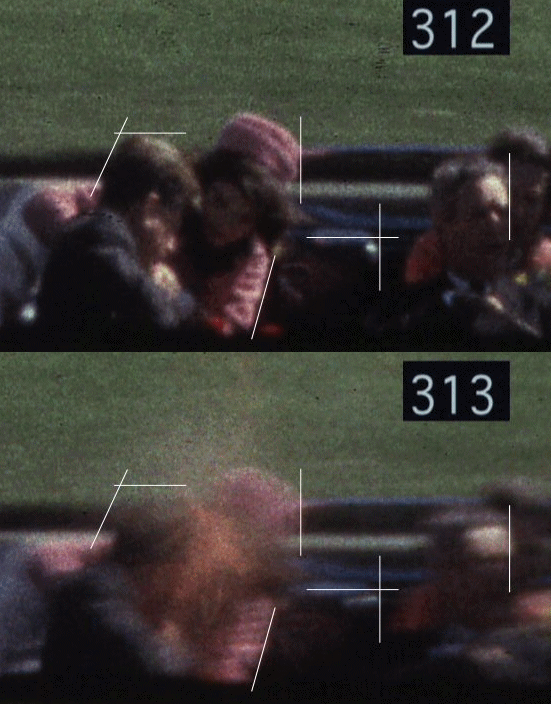
01. If a shooter shot Kennedy in his right front temple from a position in his front right, why was there no damage to the left rear of his head? Also it has been conclusively demonstrated by dozens of ballistics experts that it is impossible for small arms fire to propel an object. Given this fact, and the fact that Kennedy's head moves forward for a split second before going backwards (see below), why can't conspiracists admit that the president's "back and to the left" head movement (such as it is) is primarily due to a spasmodic neuromuscular response (a death spasm) the president experienced upon having his brain suddenly and violently destroyed?
Notice Kennedy's head moving FORWARD slightly at impact, not backwards! This proves a shot from behind. You will also notice the brain spray goes forward to the president's front right. Again, this indicates a shot from behind.(sorry for the disturbing image)

(Zabruder frames 312 and 313 scrolled back and forth showing head moving forward on impact)
02. The conspiracists want to believe that Kennedy and Connally were shot by different people using different bullets. If so, where did these other bullets go? A bullet passed through Kennedy. (Remember, he didn't have a bullet lodged in his body, meaning it definitely went through). Also, no bullet was lodged in Connally's body either. Also, neither man had bullet fragments in their body (other than some small grams of lead in Connally's wrist). So where are all these other bullets? If more than one gun man was involved, how is it that only the evidence (bullets, casings, fingerprints, etc.) connected to Oswald was ultimately recovered?
03. Why is it that each one of the myriad conspiracy theories can be "proven" as well as any other one?
04. Just how vast is the conspiracy? Is every police officer in Texas, every federal government employee (past or present) and everyone who believes the Lone Assassin point of view in on it? Am I part of the conspiracy and cover-up?
05. Ted Kennedy was around in the senate for 45+ years and had considerable power. Was he also part of the cover-up? Why did he not spear-head an investigation into his brother's assassination? If there was a cover-up, why wasn't he killed too? Did the conspirators somehow know he would spend almost 50 years in office and yet not be suspicious?

(Photo of ol' Ted Kennedy)
06. Couldn't the minor disparity in earwitness reports of the number of shots in Dealey Plaza be due to the fact that echo is a huge factor in such an urban surrounding?

(arial photo of Dealey Plaza)
07. What is the police's incentive for covering up the crime? Why would they NOT arrest anyone who might be connected by evidence to one of the greatest crimes in history? What is their motive? Furthermore, how can you expect us to believe they were bumbling "Keystone cops" but also sophisticated enough to suppress evidence that anticipated decades of scrutiny.
08. If the so-called "magic bullet" was a plant, why didn't the conspirators use a more convincing bullet?
This is the so-called "magic bullet" found on Gov. Connally's cot. Sure, it seems "pristine" from this view...

...but is far from "pristine". Here you can see it is actually quite badly damaged.

(photos showing side and end on view of the so-called "magic bullet")
09. How can one explain the key-hole shaped entrance wound on Connally's back? Doesn't this point to a tumbling bullet? Say, one that had passed through another object (like the president's neck for instance)?

(illustration showing the tumbling nature of the bullet that hit Kennedy and Connally)
10. They had several miles of route in which to set up an assassination. So why did the conspirators wait until Dealey Plaza to kill the president? Wasn't there better spots in which to shoot the president?
(map of motorcade route published in the Dallas Paper)
11. How does one explain away the fact that two men standing in the window just below the sixth floor window heard three shots from above their heads, and heard shell casings hitting the floor? Were there any such witnesses in the other buildings?
This photo was snapped within 30 seconds of the shooting. Note the two men in the window, still in their location when the shots rang out from the window just above their heads.
12. If the "magic bullet" shot is so outlandish, how is it that it can be repeated and reproduced forensically? It has been shown numerous times to be possible, not IMpossible.
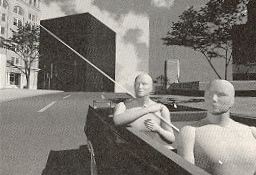
This diagram shows the single bullet trajectory to be consistent.

(illustration showing a direct line from 6th floor window through Kennedy into Connally. No magic needed)
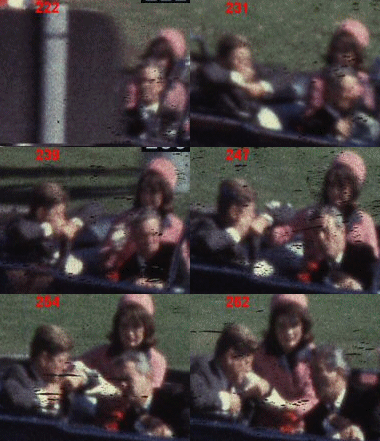
Notice in these frames from the Zapruder film that both men are reacting simultaneously to some trauma. This would have been when the bullet hit both Kennedy and Connally.

(segment of the Zapruder film showing Kennedy and Connally reacting at the same moment)
13. How many shooters would satisfy the conspiracists? One, two? If two were arrested, they would have wanted three. Etc.. If the conspiracy involves hundreds, perhaps thousands of people, how many would we have to prosecute?
14. If Oswald was an innocent man, why is it that he was the only TSBD employee to leave the building early (immediately after the shooting) that day? Did he have foreknowledge that he was being set up?
15. In "JFK" (the movie) every effort was made to indict the CIA, FBI, Lyndon Johnson, David Ferrie, Clay Shaw, J. Edgar Hoover, and many others, except... the one man who is tied by overwhelming evidence to the crime (LHO). Not one scene is dedicated to the possibility that Oswald did it. In fact every effort is made to exonerate him. So, why are most conspiracists also very pro-Oswald? In fact, some claim that he is a completely innocent victim?
16. Many conspiracists claim Oswald had no motive to kill Kennedy. Ignoring for a moment the fact that crazy people don't need a logical motive, could Kennedy's anti-Communist, anti-Castro stance provide a possible motive for the pro-communist, pro-Castro Oswald?
17. There have been four investigations into the assassination and all have concluded that Oswald shot the president from behind. The HSCA concluded there may have been another shot based on a dictabelt recording. But modern technology has now discredited the dictabelt recording, which was inconclusive anyway. Why do conspiracists still cling to outdated and discredited evidence to prove their theory?
18. Why do most JFK conspiracists also believe in conspiracies involving MLK, RFK, the moon landings, and 9/11?
19. If Ruby was contracted to silence Oswald, who was contracted to silence Ruby? Ruby lived for four years following the assassination. He issued a deathbed statement saying he was not part of a conspiracy. Why do conspiracists choose to ignore all this?
20. If Oswald was innocent why did he openly lie during his arrest?
21. If Oswald's statements were fabricated by the police as part of a huge conspiracy, why didn't they simply say that he confessed to the murders?
http://www.ratical.org/ratville/JFK/LHO.html
22. If Ruby was hired to silence Oswald, how did he know that Oswald had not spilled his guts already during the 2 days he was in custody? For all Ruby knew, Oswald had told investigators everything.
23. Why do many conspiracists portray Oswald as an innocent victim, when evidence proves he had already attempted (and failed) to assassinate General Edwin Walker only seven months prior to the Kennedy assassination?
(Edwin Walker - The other guy Oswald shot at)
24. Why did Oswald say "This is it" or "Well, it's all over now." when he was arrested, if he was innocent?
25. Given that Oswald was definitely inside the TSBD building at the time of the shooting, and given that several witnesses saw a man fitting his description in the sixth floor window with a gun at or around the time of the assassination, and given that Oswald then left the building immediately following the assassination (the only TSBD building employee to do so), why is it that he is considered "innocent" by many conspiracists?
26. If Oswald was part of a huge organized plot, why did he flee the scene on foot, then on a bus, then in a cab? They couldn't arrange a get away car for him?
27. If Ruby was out to silence Oswald, why not a head shot? Oswald could have survived a gunshot to the body.
28. If LBJ masterminded the whole thing, wasn't he concerned that Bobby Kennedy, who was the Attorney general at the time, would find out about the plot? Or was Bobby in on the plot too?
29. Why do conspiracists attempt to discredit every Warren Commission (hereafter WC) witness, yet are apologists for any witness spouting conspiracy-friendly testimony? Do you notice a double standard?
30. The WC was chronologically closer to the event. Therefore the WC benefitted from fresh witness recollections and available fresh evidence.
31. Why is it that most, if not all "new evidence" of a conspiracy is in the form of "secret documents" and/or hear-say witness testimony?
32. If it is so obvious that there was more than one shooter in Dealey Plaza that day, why do so few earwitnesses claim they heard the shots from two or more sources? (only around 6% of witnesses claim they heard shot from multiple directions)
https://pmc.ncbi.nlm.nih.gov/articles/PMC8637832/Most earwitnesses agree that three shots were fired. Variations can be attributed to echo effect and acoustics in Dealey plaza.
33. The entire event took only a few seconds. Also, it was a very traumatic thing to experience. Is it possible some of the "grassy knoll" earwitnesses misinterpreted echoes as shots coming from the fence area? And supposedly people saw smoke coming from there. What type of modern rifle expels a giant puff of smoke? Was the assassin near the grassy knoll using a blunderbuss? Could cigarette smoke be a better explanation for the smoke supposedly seen there?
34. Is it possible that the first wave of people seen running toward the picket fence area were actually seeking, not the assassin, but cover? Is it possible that the second and third wave of people running toward the knoll area assumed the first wave were chasing a shooter? Do unarmed civilians usually pursue armed assassins?
35. If similar evidence to that which was found in the sixth floor of the TSBD building, was found in, say, the Dal-Tex building, would conspiracists be so quick to dismiss it?
36. Since incredible tragedies often produce conspiracy claims, could many of the conspiracists be emotionally motivated? Or financially motivated?
38. Most people standing near the TSBD building instinctively assumed the shots came from that building, up high. Nearly everyone assumed it was either firecrackers, or a car backfire. By the time most of the witnesses realized it was gunshots being fired, the assassination was already over. Still, within only 30 seconds, press photographers (incl. Dillard) photographed the 6th floor window. If this was not the source of the bullets, why did much of the focus immediately go there?
Tom Dillard's famous photo taken only seconds after the last bullet was fired.

39. Could many of the conspiracists also be driven by a profit motive? (Book sales!)
40. Most older conspiracy related books are supplanted by each new book, which proposes to present "new" evidence, relegating old conspiracy books and theories to be considered outdated, or inferior to the new books. So, therefore, which conspiracy book tells the definitive truth? Which book presents the true conspiracy plot, in full, and able to withstand scrutiny? Will this book be supplanted by another new book, providing new evidence, in the future?
41. The WC report is just as compelling today, as when it was released 47 years ago. Are any of the various conspiracy books still credible after 47 years of similar relentless scrutiny?
42. If LBJ had wanted to kill Kennedy, couldn't he have just poisoned his coffee in the Oval Office or something? Why do it in front of hundreds of witnesses, in your own home state, in broad daylight, in front of friends and family, and involving hundreds of co-conspirators?
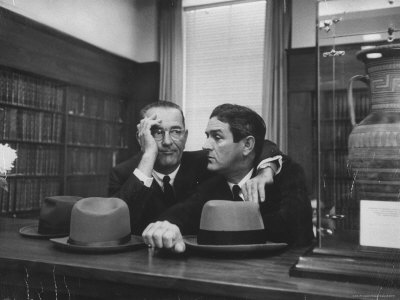
43. If LBJ had planned the whole thing, do you really think he would have arranged for his long time buddy John Connally to be sitting in the line of fire?

(photo of LBJ and Connolly showing how chummy they are)
44. If the claim is that "most witnesses have died mysteriously" why did so many of them die of natural causes, or are still alive, or at least lived long after the assassination? Most Kennedy witnesses died after testifying, so why would they have been killed? Wouldn't killing these people be pointless if done after the fact?
45. If Oswald really thought he had been betrayed as a "patsy", why didn't he just start naming names?
46. Why was Oswald not out watching the parade like most everyone else? Why didn't Oswald go outside and try to find out what all the hubbub was about? Why would he be casually having lunch inside, when right outside the window the President himself was passing by?
47. If part of a huge plot, when he was cornered in the Texas theatre, why didn't Oswald just commit suicide?
48. Did Oswald kill Tippett? If not, then who did? If he did, then isn't that pretty much an admission of guilt? If he didn't, then who did? Would the police let some guy who killed one of their fellow officers get off Scott-free?
49. Why would Tippett stop to question a man who didn't fit Oswald's description? Why would this non-suspect then gun him down?
50. Why would the majority of Tippett murder witnesses describe a man matching the description of Oswald? What is their incentive to lie? Because Oswald was seen in the sixth floor window, and then subsequently went missing from the TSBD building, he became a suspect. His description was then sent out over dispatch. How did Tippett already have a detailed description of Oswald less than 45 minutes after the assassination if this were not so?
51. Every aspect of the WC shooting scenario has been proven to be plausible forensically (even the so-called "magic bullet"). Why is this fact insignificant to conspiracists?
52. Why would all of the people that comprised the WC (or indeed the subsequent Clark panel, Rockefeller Commission, Church committee, and the House Select Committee on Assassinations) all stake their reputations on a cover-up? Were all of these people in on the plot too? What was their incentive?
53. Will you at least concede that, in your opinion, the "lone assassin" scenario is possible?
54. Oswald simply decided to kill Kennedy through selfish ambition, a warped sense of vengeance, and a deluded sense of self worth. Who else, known to be in Dealey Plaza that day, had the motive, opportunity, and means to shoot Kennedy that day? Oswald had all of that, AND he was already an attempted (albeit failed) assassin?
55. Who transported Oswald's rifle to the TSBD building that day if not Oswald? It certainly got there somehow. It was missing from his home, and found in the 6th floor of the TSBD. Is it a coincidence that Oswald's weapon was found, AND he himself was reported to have been seen firing a weapon?
This is a photo of the inside of the 6th floor window sniper's nest. Notice, someone was a busy little man, working hard to make a nice cozy little sniper's nest.

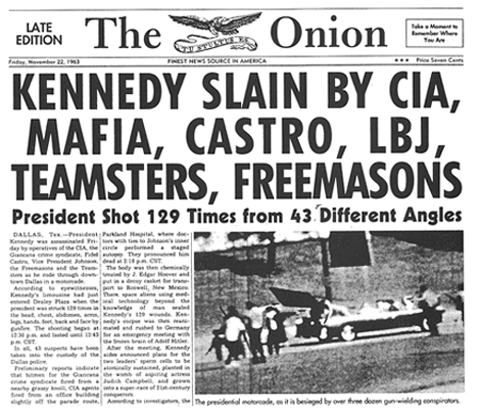
This satirical newspaper headline shows the ridiculousness of all these myriad conspiracy theories...

My Conclusion: OSWALD DID IT!
What follows is my olive branch to the conspiracy crowd.
In assessing the assassination of John F. Kennedy, I take what might be called a restrained lone-shooter position. The available historical record strongly supports the conclusion that Lee Harvey Oswald fired the rifle from the Texas School Book Depository and carried out the murder. The forensic trajectory analysis, eyewitness testimony placing him in the building, his rifle linked to the scene, and his flight afterward all point in a consistent direction. In that sense, I believe Oswald did it. He pulled the trigger. He bears direct responsibility for the act itself. In my mind, that's case closed.
At the same time, acknowledging Oswald as the gunman does not require intellectual rigidity about every surrounding possibility. Oswald was a volatile, attention-seeking figure with a history of ideological grandstanding, including his defection to the Soviet Union and erratic political posturing upon his return. Such a personality could, at least in theory, have been nudged, encouraged, or subtly manipulated by individuals who recognized his instability and grievances. That does not mean there was a grand, tightly coordinated conspiracy directing every movement. It simply means that manipulation—psychological, ideological, or even through informal suggestion—cannot be ruled out with absolute certainty.
This distinction matters. Saying Oswald acted alone in the physical commission of the crime is not the same as claiming he existed in a vacuum of influence. History is full of individuals who commit violent acts independently yet are influenced, radicalized, or steered by others who never appear on the stage. My position does not insist that such manipulation occurred; rather, it concedes that human events are complex and that opportunistic actors sometimes exploit unstable individuals.
In short, Oswald fired the shots and carried out the assassination. That remains the most defensible conclusion. But leaving a narrow door open to the possibility of prior encouragement or subtle exploitation does not weaken that conclusion—it reflects a careful, sober assessment of how human motives and political violence often intersect.
Thank you for reading.